NASA announces, "Ice found on Mars"
-
#1 -
#2 way cool! -
#3 It's way cool. Couldn't it have disappeared due to wind? If you look at the same picture, you'll notice some of the specs moving from one location to another. -
#4 yeah those two pictures weren't overly conclusive, I mean there are alot of chemicals that would dissapear over time given certain condtions. Though I assume Nasa has more information than those two pictures .
Furthermore, who care if there is ice on Mars, there is ice in my freezer too. 😀 -
#5 Yes, but if there is ICE, then there are chemical compounds that can be recycled for use in a manned mission. ICE is the key to water, oxygen and hydrogen energy. If they can use it on Mars, that means less they have to carry. -
#6 Atomm, I think we need a <Sarcasm> tag -
#7 I kinda doubt we will ever get to Mars, at least not in my lifetime. The world has changed politically so much in the last 30 years for that to happen anytime soon.
I think they will waste 10 years getting back to the moon for the dark side moonbase which is just going to convince them Mars is outta the question.
Space exploration is going to be back shelved. The world is going to be too busy wasting time and political favors on global warning, overpopulation problems planet wide (real), and energy shortage problems of which politicians will never agree on for another 30 years.
We knew there was a 99% chance of finding water near the polar caps. Did it take millions of bucks to just confirm that, or are they just spending money as long as they can. -
#8 Lexx, I think going to Mars is going to fall by the wayside as well. However, I think it will be replaced by a more attainable goal of either a Midpoint station in space, on an asteroid or a moon station. As of right now, I don't think NASA is focusing on the Moon. But everyone else is and that alone will push us to change course.
It's sad really, but I think the moonbase will become a bigger push due to moon based weapons and not for the betterment of mankind.
If we were smart, we would put more money into Space Based Telescopes and lunar rovers. Those two things alone have pushed our knowledge of the universe further than anything man has done in space.
Bubba, it was a fast read and as usual, I missed the sarcasm.... -
#9 Sadly Atomm, most of our technologies are weapon based at least at their creation. Then again the military does get the majority of our budget so it makes sense they would create many new technologies.
There is no doubt NASA isn't the proud agency it once was. I have been watching the "When we left Earth" mini-series on Discovery, it's cool to relive Mercury and Apollo missions. This show is well worth the time. -
#10 Hey, who edited my post. I had global warming (hoax), now the hoax is gone.
Would global warming (copyright 2000 Al Gore) be better? Come on, you know its a hoax. If you actually believe its true and worthy of spending 20% of our economy on, of which 99.999% of that goes to environmental groups and lawyers pockets', then I'm at a lose for words.
As far as Mars goes, it does suck Atomm. I'd hoped that would have been reached by now but we will never have another Prez Johnson that loved NASA as much. I'm afraid the future only holds those that would spend billions building mini-malls in inner city neighborhoods while cutting off space exploration entirely.
The darkside moonbase is supposedly best for practice, and to keep those there from seeing earth in the process, to make them really feel isolated. I kinda think its a place where they can install some super weapons ;p ...actually I read it would be a great place to install a new telescope... hm... why couldn't they just move the hubble to the moon's orbit?
Does it show up in the logs if I edit a post? - Sarge -
#11 Lexx, I don't see anything in the admin or moderator logs that suggests that anyone edited your post. -
#12 I am the original wide-eyed kid when it comes to space exploration. Just recently I was thinking back to when Voyager went past Jupiter, they ran a lot of programs on PBS about it while it was happening. Back then, ppl didn't have color TV's all over the house: we had just the one. The folks were in pain having me monopolize the living room TV with this "space stuff", but we had sent a spacecraft to the outer planets, and I HAD TO SEE THE PICTURES! I asked for money for Christmas, and my Birthday (they're close together) one year so I could buy a telescope.
That said, we're not putting ppl on Mars in my lifetime, unless I live to be a lot older than I figure to. Also, I don't see the value in making a moonbase. Just about everything we can do on the moon, we can do from orbit better and cheaper, and that includes weapons.
I no longer see any meaningful colonization of Mars ever happening. Maybe we go there and see the sights, run tests, plant a flag. We'll always be limited by the amount of water there, and without a denser atmosphere, the water's gonna keep sublimating out into space. No precipitation, no renewing or recycling of the water. Sure, maybe we put a hundred ppl there, maybe we even put thousands there eventually, so what? It's not a habitable planet, no ecosystem. When we use up the water, then it becomes just another gravity well to fight your way out of and avoid in the future. The same with the moon, except it's closer, but doesn't have any ice at all.
Meaningful space travel, I think, will require a space elevator. GOT to get stuff out of Earth's gravity on the cheap.
Edit:
Well, maybe 'large-scale' fits better than 'meaningful' in the next-to-last sentence. -
#13 I saw something recently that there is a group of NASA folks working on a trip to an asteroid as an intermediate step to going to mars. The idea is that it is not quite so far and eliminates the issues of dealing with the martian atmosphere/weather.
The big thing that they were talking about with regard to this was that it will require that mission control be located on board the spacecraft. It's too far and there is too much time lag to monitor/control a manned craft that far away. They basically need to be able to diagnose and solve any problems themselves, and this creates a lot of other issues in terms of the number of people, size of the craft, and other concerns.
On the other hand, the mining of asteroids could provide huge benefits. -
#14 I have always wondered why we are not mining on the moon... -
#15 Moon mining will be the first big push if you ask me. When it's feasible to go to the moon and bring back some sort of fuel, it will become a commercial endeavor. That's what it will take to colonize the moon.
I think back to the days of Christopher Columbus. Nothings changed. Once it's profitable to do the voyage, it will be financed by someone. -
#16 Atomm wrote:I think back to the days of Christopher Columbus. Nothings changed. Once it's profitable to do the voyage, it will be financed by someone.
Someone call Virgin! He will finance anything crazy!!! 🙂 -
#17 LOL!
I thought I read that someone had a Prize of 10Million to reach the moon and come back. Surprised it was virgin. -
#18 What does the moon have in abundance that we don't have on Earth, where we don't have to accelerate every last tool, bit of food, water, air, and equipment the miners will need to 25,000 MPH? -
#19 It's not so much what is there as the interesting things that manufacturing in reduced gravity can do. Also, if we could build space vehicles out there already, then it takes a lot less effort to launch them. They also don't have to be structurally as heavy duty as those that need to handle atmospheric entry or attain escape velocity to get off the planet. It will most certainly cost enormous amounts of money to set up, but if we get serious about space exploration, it is the way to go. -
#20 Here is what I found Doc. I thought it was Hydrogen3, but didn't know about Helium3. Helium doesn't replenish on Earth, so that's a good thing.Hydrogen-3, aka tritium, decays into helium-3.
Either way, there is enough of it on the Moon to meet the Earth's energy needs for thousands of years. In fact, there's more of it on the Moon than there is oil on Earth! -
#21 Sarge wrote:It's not so much what is there as the interesting things that manufacturing in reduced gravity can do. Also, if we could build space vehicles out there already, then it takes a lot less effort to launch them. They also don't have to be structurally as heavy duty as those that need to handle atmospheric entry or attain escape velocity to get off the planet. It will most certainly cost enormous amounts of money to set up, but if we get serious about space exploration, it is the way to go.
Build a ship on the Moon? But we'd still have to haul just about EVERYTHING but the ore they mine to the Moon, which means we're paying the energy cost of escaping TWO worlds. Build it in space from materials and components made on Earth and hauled up by the space elevator. . .that sounds far more feasible and cost/energy efficient.
Would we mine iron on the Moon? Make steel? Sounds kind of like a huge undertaking for ppl who last went there in the early 70's in tinfoil ships. This, on the Moon?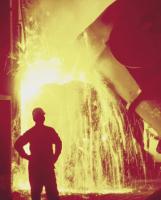
There's a ton of problems with going to the Moon and living there, let alone trying to operate a blast furnace and trying to turn ore into usable metal on top of that. I don't see that happening in the 21st century. The 'steel-making on the moon' thing will probably take longer.
I know they've worked on zero-G manufacturing on a very very small scale to see what results, and there may be some benefits. . .but it better be fantastically useful. . . .like ten thousand dollars an ounce useful.
So much of this depends on solving problems not yet solved. Build the space elevator, and that will go a very long way towards reducing costs and transporting large amounts of material, and making all this far more practical. -
#22 Atomm wrote:Here is what I found Doc. I thought it was Hydrogen3, but didn't know about Helium3. Helium doesn't replenish on Earth, so that's a good thing.
That I didn't know. I was under the impression the moon was just about useless. Guess they could have covered that better in grade school.
Still, I just don't see the US doing any more past our orbit a very long time. Too bad the space elevator will never happen. Even if it was possible, who is going to pay to build it. The best theory to building one is to drag an asteroid to earth's orbit for the raw materials and use robots to mine/process, manufacture/fabricate, and drop the carbon based fibers towards earth as its being built.
Then there's the anchor to the perfect spot @ the equator with a magnetic rig. So where is the power going to be generated from to run a magnet that size??
Great scifi stuff, but never going to make it past the drawing board, not even in our grandchildrens' lifetimes. -
#23 lexx wrote:That I didn't know. I was under the impression the moon was just about useless. Guess they could have covered that better in grade school.
Still, I just don't see the US doing any more past our orbit a very long time. Too bad the space elevator will never happen. Even if it was possible, who is going to pay to build it. The best theory to building one is to drag an asteroid to earth's orbit for the raw materials and use robots to mine/process, manufacture/fabricate, and drop the carbon based fibers towards earth as its being built.
Then there's the anchor to the perfect spot @ the equator with a magnetic rig. So where is the power going to be generated from to run a magnet that size??
Great scifi stuff, but never going to make it past the drawing board, not even in our grandchildrens' lifetimes.
I missed your post, Atomm, sorry. The H3 sounds worthwhile on the surface, though I haven't looked at it even a bit. I'll have to do that. You certainly answered the question of, "What's up there that we don't have plenty of down here."
The space elevator doesn't need an asteroid, Lexx. A space station will do for starters, then once they have a SINGLE, SMALL space elevator, it can be used to (relatively) cheaply add to the station, increasing the counterweight. The space elevator is extremely scalable. If we get ONE, it will be (again, relatively) cheap to make more and bigger ones.
It's gotta be easier than wrangling an asteroid into a stable, geosynchronous orbit.
I tend to put a lot of emphasis on the space elevator idea, because it seems the cheapest, simplest, and has the biggest payoff. The only questions are, can we make a carbon nanotube ribbon strong enough, and how will it act and hold up under the environmental conditions and stress of use? Big questions, but many ppl seem to think it's possible. We'll see, I guess, if we live that long. -
#24 Atomm wrote:Here is what I found Doc. I thought it was Hydrogen3, but didn't know about Helium3. Helium doesn't replenish on Earth, so that's a good thing.
OK, time to revisit this.
We CAN make Helium-3, but it's difficult and expensive, apparently. From Wikipedia:
http://en.wikipedia.org/wiki/Helium-3#ManufacturingDue to the rarity of helium-3 on Earth, it is typically manufactured instead of recovered from natural deposits. Helium-3 is a byproduct of tritium decay, and tritium can be produced through neutron bombardment of lithium, boron, or nitrogen targets. Current supplies of helium-3 come, in part, from the dismantling of nuclear weapons where it accumulates[17]; approximately 150 kilograms of it have resulted from decay of US tritium production since 1955, most of which was for warheads[18]. However, the production and storage of huge amounts of the gas tritium is probably uneconomical, as roughly eighteen tons of tritium stock are required for each ton of helium-3 produced annually by decay (production rate dN/dt from number of moles or other unit mass of tritium N is N γ = N * [ln2/t½] where the value of t½/(ln2) is about 18 years; see radioactive decay). If commercial fusion reactors were to use helium-3 as a fuel, they would require tens of tons of helium-3 each year to produce a fraction of the world's power.
That last sentence is a buzz-kill. We aren't ever going to have that much H-3, not the way things are currently.
Unfortunately, it's not really PLENTIFUL on the Moon either. Wikipedia again:
http://en.wikipedia.org/wiki/Helium-3#Extr...strial_suppliesThe Moon's surface contains helium-3 at concentrations on the order of 0.01 ppm.[21][22] A number of people, starting with Gerald Kulcinski in 1986,[23] have proposed to explore the moon, mine lunar regolith and using the helium-3 for fusion. Because of the low concentrations of helium-3, any mining equipment would need to process large amounts of regolith,[24] and some proposals have suggested that helium-3 extraction be piggybacked onto a larger mining and development operation
Extracting H-3 from the lunar 'soil' will be a massive undertaking, and with the effort required to get ppl and equipment (and all equipment/life-sustaining materials) to the moon, then the challenges and dangers faced just surviving there, much less doing strip mining and performing the extraction of the H-3, it seems unlikely that it would be an advantageous undertaking. Solar panels for the energy needs of Moon visitors would sound much easier, and less dangerous. . .but again, we're back to, "Why go to the Moon at all, when there's nothing up there we need."
Next, I did some reading on hydrogen-3, or Tritium. It seems this is made through fission in power plants. . .also found in heavy water deuterium containment tanks, as it builds up over time from captured neutrons. Mainly what I tool away from this is that tritium and helium-3 is rare as hell, hard to make, and it decays. Wikipedia says the US has about 75 KG of Tritium, and have only ever made a total of 225 KG of it. H-3 is similarly rare, being made of decayed tritium.
The more I read about the problems with replacing oil as an energy source, the more I realize how amazingly useful the stuff is. Tritium and H-3 just aren't ever going to be available in enough quantities to make a dent in the world's energy needs. . .if I'm reading this stuff correctly. Regular old hydrogen isn't nearly as energy-dense as oil, and it takes energy to get it from water. . .which, IIRC, has a particularly strong bond, which I guess means it takes a fairly large amount of energy to break. Coal is dirty as all get out. . .
Solar power isn't available 24/7, even if we ramp up the efficiency. . .and we need to have the panels relatively near a population, as you lose energy over large distance - we can't have panel farms in Nevada powering the East Coast. We could store solar energy and use it at night, but every form of battery we've developed has a finite lifetime, and suffers from the need for somewhat pricey metals, or poisonous elements in them that get into the environment when discarded, or both. I hope the nanotube capacitors turn out to be worthwhile for energy storage.
Wind power could help supplement our power needs, but probably only a few percent of what we need. Hydroelectric power is nice, but needs large amounts of running water(which isn't available everywhere), and has an impact on the body of water(dams and such) that we might not always like or want.
Fission seems doable for quite awhile.
(looking back at post)
Damn, I really have too much time on my hands, but I find it fascinating to read up on and discuss new things. It's a worthwhile pursuit just to expand your world. Let me know if you catch any flaws here, 'cause I probably just made most of this stuff up. 😉 I'm way over my head here. . .I was a Bio major. I think my new sig is going to my head 🙂
(Thomas Dolby)
"SCIENCE!"
(/Thomas Dolby) -
#25 -
#26 Doc, that was a fascinating post.
While the commercial aspect of the moon appears to be low, I think it would still be a great building block for our expansion into space. You know it's going to happen and we have to start somewhere. But without commercial incentive, I'm not sure how quickly it will happen.
The more I read about all this stuff, the more I realize that economics rules everything. -
#27 I am telling you combined heat and power mini turbines are the next step. They don't solve the energy crisis, but they do supply clean power and use the byproduct heat as well. The biggest benefit is that they are super effecient, and they are a current technology. I had the benefit of getting a tour of a CHP Turbine test center, it's amazing tech.
With mini and micro turbines, you could install one at your house and supply most if not all your energy needs plus most or all of your heating/AC needs with a fraction of the oil or natural gas you use now. In some installations mini/micro turbines can be adjusted to burn byproduct methane gas.
This is from a friend on the topic http://www.nh.gov/oep/programs/MRPA/confer...06-Mitchell.pdf -
#28 Atomm wrote:Doc, that was a fascinating post.
While the commercial aspect of the moon appears to be low, I think it would still be a great building block for our expansion into space. You know it's going to happen and we have to start somewhere. But without commercial incentive, I'm not sure how quickly it will happen.
The more I read about all this stuff, the more I realize that economics rules everything.
It's true, and in this case, the major cost is energy. How much does it cost to get everything we need to a location, and to bring things back? The more energy it takes, and the more the energy costs, then the more we some offsetting financial return on the effort.
The only two things appealing about a Moon colony are
1. It's close.
2. It has 1/6 the Earth's gravity.
If it at least had water, it would be a hell of a lot more appealing. It literally has nothing (as far as we've discovered in this thread, at least) that we want or need, in quantities that would make it worthwhile. If you want a staging area for space exploration, it seems Earth orbit is more sensible than the Moon. . .it eliminates dropping ourselves into another body's gravity as a needless extra step. Ppl get caught up in the idea that the Moon's gravity is only 1/6th's that of Earth, but really, you're using a hell of a lot of energy to get yourself up to 25,000 miles per hour just to get out of Earth's gravity. Why drop yourself right back into another gravity field that you'll need to escape later? Sure it's only 1/6th as much energy, but it's 1/6th of a hell of a lot of energy, and you're using fuel that you'll also need to bring with you from Earth, which also took a hell of a lot of energy to transport. 🙂
I could see having a small scientific station on the Moon one day, of course. -
#29 Bubbaspanky wrote:I am telling you combined heat and power mini turbines are the next step. They don't solve the energy crisis, but they do supply clean power and use the byproduct heat as well. The biggest benefit is that they are super effecient, and they are a current technology. I had the benefit of getting a tour of a CHP Turbine test center, it's amazing tech.
With mini and micro turbines, you could install one at your house and supply most if not all your energy needs plus most or all of your heating/AC needs with a fraction of the oil or natural gas you use now. In some installations mini/micro turbines can be adjusted to burn byproduct methane gas.
This is from a friend on the topic http://www.nh.gov/oep/programs/MRPA/confer...06-Mitchell.pdf
Increased efficiency is always a good thing - more bang for your fuel buck. I'll check out your link. -
#30 That presentation was really cool. I had not heard of CHP. I like what I see, but what would this do to the Electric Companies? The reason I ask is because of the lobbying power of the energy sector will squash anything that doesn't benefit them.
BTW, going back to my economics comment. It appears FNKRambo was right. Get your assless chaps now because tomorrow might be too late. We are already in the apocalypse and the new currency is energy! -
#31 At least here the power companies have supported it, building new Nuke plant is expensive, they would rather stick to the status quo. I am sure at some point that balance tips.
As you have said before it's the lobbyist that keep screwing everything in our country... eventually that problem needs to be solved. -
#32 Since this turned into an energy conversation. Foxtrot is a wonderful cartoon here is his take:
-
#33 Clearing various shortcuts off my desktop. . .
Good article on space elevators, by the guy who literally wrote the book on them.
http://www.spectrum.ieee.org/print/1690
A pessimistic view of hydrogen as fuel.
http://aardvark.co.nz/hydrogenfuel.shtml -
#34 Well, it's official: They have found ice on Mars.
http://blog.wired.com/wiredscience/2008/07...cal-test-c.html -
#35 Sweet! Martian Beer!
Seriously, this is important to the sustainability of an expedition to another planet.
I just wish we would put together an underwater explorer for Titan. I bet all the really cool "Martians" are there..... -
#36 Atomm wrote:Sweet! Martian Beer!
Seriously, this is important to the sustainability of an expedition to another planet.
I just wish we would put together an underwater explorer for Titan. I bet all the really cool "Martians" are there.....
You are right. Water is vital to a Mars expedition. You can drink it, and the molecules can be split for breathing and for fuel. Put water on a planet and you've made it much easier to visit.
I don't hold much hope for any large colonies on Mars, ever. The water diffuses out into space. Even if we were to terraform it, thicken the atmosphere, I think you'd have close to a barren desert planet. Plenty of water for a few ppl, but you can't sustain a large population, not without some sort of natural water cycle. I guess a moderately sized population might work, maybe like a city, with good water filtration and recycling, but any water you use to breath and burn will be gone forever. -
#37 -
#38 From Slashdot:
The "word on teh internets" is that they've found "perchlorate", an oxidizing substance used in rocket fuel, explosives, fireworks, fertilizer, and medicine.
http://science.slashdot.org/article.pl?sid...53&from=rss
One kind 'decomposes exothermically' to produce oxygen.
Hope it's present in great enough quantities. . .and relatively near ice/water. -
#39 That is way cool. I did some digging and found out about Oxygen Generating Candles. I had no idea we had the means to produce breathable Oxygen from a stored chemical reaction.
http://en.wikipedia.org/wiki/Chemical_oxygen_generator
Even crazier, it's already in use on the Space Station as a backup.